Because Psychology Can Help Reduce Police Violence
By Kimberly Kahn, PhD, President (Society for the Psychological Study of Social Issues)
Disproportionate police violence against minority communities, while not a new phenomenon, took on greater prominence in the national consciousness following the deaths of African Americans Michael Brown in 2014 and George Floyd in 2020. Like so many critical social issues that receive such focused attention, perceptions of racial bias in policing have become politicized and entrenched in recent years.
Social science can help us break through this entrenchment and better understand the causes and consequences of police violence without succumbing to simple narratives, blame, or stereotypes.
Throughout my career as a social psychologist, I’ve built collaborative relationships with police departments across the United States to study racial bias in policing and, ultimately, reduce instances of violent police contact against minoritized communities. These relationships reflect the mutual benefit social science can offer both to the police departments and the communities in which they operate. They have also permitted me to access critical police data and information that allows research to go beyond simple documentation of disparities to investigation of the psychological processes through which these disparities develop. For example, analyzing police booking photographs has identified how indicators of racial phenotypicality predict police use of force, deepening our understanding of how racial biases can have different effects within racial groups.
“Social science can help us break through this entrenchment and better understand the causes and consequences of police violence without succumbing to simple narratives, blame, or stereotypes.”
Similarly, research on police use-of-force incident report files, which contain a first-person narrative of the incident by the officer to recreate a step-by-step interaction that resulted in police use of force, finds that Black and Latino individuals receive more force in the beginning stages of interactions when the situation is more ambiguous and stereotypes are more relied on, and also receive more force when they resist compared to Whites. This shows how stereotypes bias behavior during police interactions as they unfold and has helped partnering police forces focus training attention to reduce police bias where it is most likely to occur.
One major contribution social science has made to the understanding of policing is the role of implicit stereotypes on police behavior. Subtle stereotypes linking race and criminality make it more likely that police interactions escalate in use of force and bias police decisions to shoot. The introduction of implicit bias into the policing field has challenged the prior conception that only explicit conscious biases lead to racially biased police behavior. Instead, implicit stereotypes linking racial minorities to criminality exist at the unconscious level and also influence behavior without conscious intention.
Within policing, this can affect the deployment of use of force and decisions to shoot, particularly in stressful and time pressure situations. For example, implicit stereotypes associating Black people with violence increases the likelihood that individuals will mistakenly shoot unarmed Black people more often than unarmed White people, a phenomenon called “shooter bias.” My research has highlighted additional contextual factors that influence shooter bias, focusing on neighborhood context, clothing type, and physical appearance. This provides a more targeted understanding of how implicit stereotypes interact with contextual factors to produce biased police decision making.
This research belongs to a growing literature on racial bias, police violence, and minority communities. But, as Dr. Kurt Lewin, founder and past President of the Society for the Psychological Study of Social Issues (SPSSI), famously said, “research which produces nothing but books will not suffice.” For social science to impact police behavior, and build safer communities, we need to go out of the laboratory and share it directly with those who need it most.
“One major contribution social science has made to the understanding of policing is the role of implicit stereotypes on police behavior.”
Since its founding in 2008, the Center for Policing Equity has tried to do just that, bringing together social scientists who partner with police departments to study and remediate bias in policing. The Center is often invited to Congress to influence police practices and direct national police policy. In furtherance of this mission, I developed and conducted police trainings on implicit bias, procedural justice, and social identity threats, highlighting key take homes from our science and how it can improve policing outcomes. These trainings have been expanded and adapted for federal law enforcement here in the U.S. and police departments in Europe and South America.
In my experience, these trainings and research have often been well received by police who might otherwise bristle at suggestions of racialized bias in their work. In a social and political environment that has encouraged each side of the conversation to potentially dig in and resist new information, the science is breaking through. This research gives us the insight and language to describe what officers see, what community members feel, and how biases, often invisible and unintended, shape those encounters, moving us beyond blame and towards improvement. When shared in partnership with the people on the ground, it can change training, practice, and policy in ways that make a tangible difference.
In a recent example, a police chief in New York sought me out to learn about my research after an officer’s question during a training session prompted him to explore the scientific evidence behind what he was teaching. After conversations, he had a new understanding of, and the evidence behind, the role of stereotypes and identity threat and their impacts on police behavior. He changed his departmental training to incorporate this new science. Shortly after, we jointly presented this information to thousands of criminal justice professionals and police officers statewide in New York, leading to real world policy change.
Because social science helps us move beyond entrenched narratives toward solutions rooted in evidence, empathy, and mutual responsibility, we can collaboratively build safer, fairer communities.
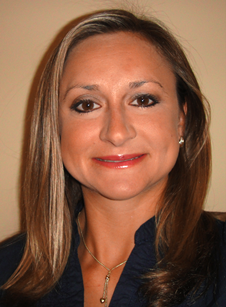
Dr. Kimberly Kahn
Dr. Kimberly Kahn, Ph.D., is a Professor of Social Psychology at Portland State University and leads the Gender, Race, and Sexual Prejudice (GRASP) research lab. She received her Ph.D. in Social Psychology from the University of California, Los Angeles, and completed a postdoctoral fellowship at Lisbon University Institute in Portugal. As a social psychologist, Dr. Kahn’s research addresses contemporary forms of implicit bias, stereotyping, and subtle prejudice from the targets’ and perceivers’ perspectives. Her work has been funded by the National Science Foundation, the Society for the Psychological Study of Social Issues, the Bureau of Justice Assistance, and the National Institute for Transportation and Communities.